
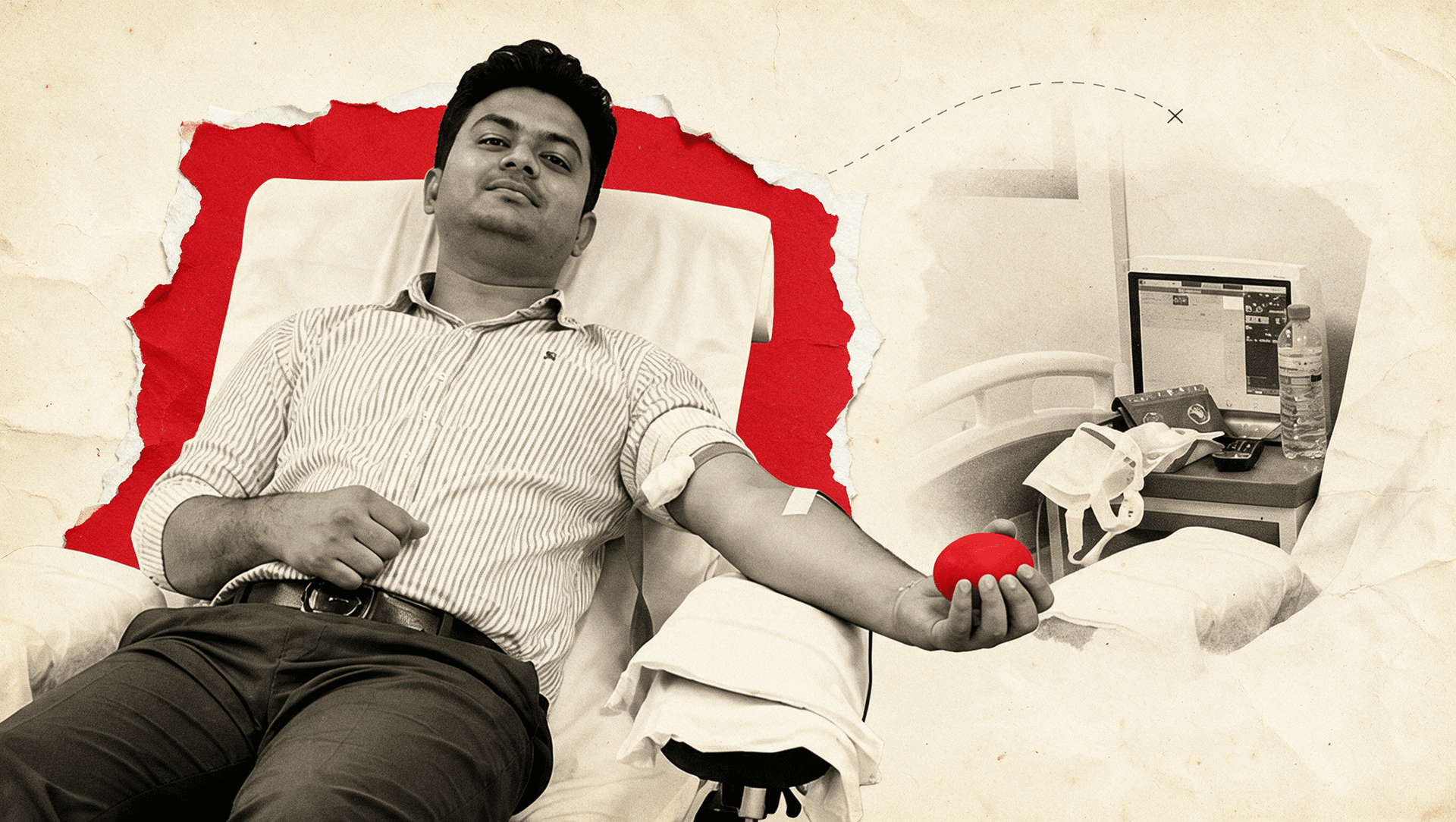
In a remarkable act of compassion and humanity, a doctor in Bangladesh has stepped forward to donate his own blood to save the life of a critically ill patient after hospital staff failed to find an available donor. The incident took place at the Uzirpur Upazila Health Complex in Barishal, where Resident Medical Officer (RMO) Dr Mahidul Islam Tuhin personally donated blood to a woman whose condition had become critical due to severe blood loss.
The doctor's selfless gesture has received widespread appreciation on social media, with many people praising him for going beyond his professional responsibilities to help save a patient's life. His actions have also highlighted a serious problem in Bangladesh's healthcare system, the difficulty of arranging emergency blood donations, particularly in rural and remote areas.
The patient, Anjura Begum, 40, is the wife of Manju Howlader, a day labourer from Bohorkathi village in Barakotha Union of Uzirpur Upazila, Barishal. Anjura was admitted to the Uzirpur Upazila Health Complex on October 31 with an incomplete abortion. Medical examinations revealed that her haemoglobin level had fallen to a dangerously low level. She was also experiencing continued bleeding, making her physical condition increasingly critical. Considering the seriousness of her condition, doctors recommended an immediate blood transfusion.
However, arranging blood became a major challenge for her family. Despite contacting relatives and potential blood donors, they could not find anyone who could provide the required blood. As time passed, Anjura's condition continued to deteriorate, increasing the urgency of the situation.
When Dr Mahidul Islam Tuhin learned about the patient's desperate situation, he decided to help personally. After checking his blood group and conducting the necessary cross-matching with the patient's blood, doctors confirmed compatibility. Dr Tuhin then donated his own blood to help save her life. His timely intervention provided the patient with the blood she urgently needed. According to her husband, Anjura subsequently began showing signs of recovery.
Speaking about the incident, Dr Tuhin explained that he was able to donate blood because his blood group was compatible with the patient's. He also expressed concern about what might happen if another critically ill patient required a different blood group that was not readily available.
Anjura's husband, Manju Howlader, said his wife's blood group was A positive. After doctors recommended a transfusion, he contacted relatives and various potential donors in the hope of arranging blood quickly. However, despite his efforts, he could not find a donor until the morning of November 1.
As his wife's condition continued to weaken because of severe blood loss, the family became increasingly anxious. It was at this critical moment that Dr Tuhin came forward to donate blood. For the family, the doctor's decision was more than a medical intervention, it was an extraordinary expression of humanity at a moment when they had almost run out of options.
Despite receiving public appreciation for his actions, Dr Tuhin used the incident to draw attention to a broader problem in Uzirpur. He stressed the need to establish an active network of voluntary blood donors who could respond quickly when patients require emergency transfusions. He also called upon local volunteers and humanitarian organisations to work together to create an organised blood donation system. Such a network could maintain contact information for willing donors, identify people according to their blood groups and help hospitals arrange compatible blood more efficiently during emergencies.
His concern reflects a wider challenge facing healthcare facilities in many parts of Bangladesh, where patients and their families sometimes struggle to arrange blood within a short period. Dr Mahidul Islam Tuhin's actions offer a powerful reminder that the medical profession is not limited to prescribing medicines, conducting examinations or performing medical procedures. Compassion, responsibility and a willingness to help others are equally important qualities of a healthcare professional.
His decision to donate blood when no other donor was available has demonstrated how individual initiative can make a difference during a medical emergency. Regular voluntary blood donation also saves lives. At the same time, one doctor's generosity cannot replace the need for an organised blood donation system. Hospitals, community organisations, educational institutions and voluntary groups all have important roles to play in ensuring that safe blood is available when patients need it.
When a doctor becomes a patient's blood donor in a moment of crisis, it demonstrates that the true spirit of medicine lies not only in treating illness but also in protecting human life.