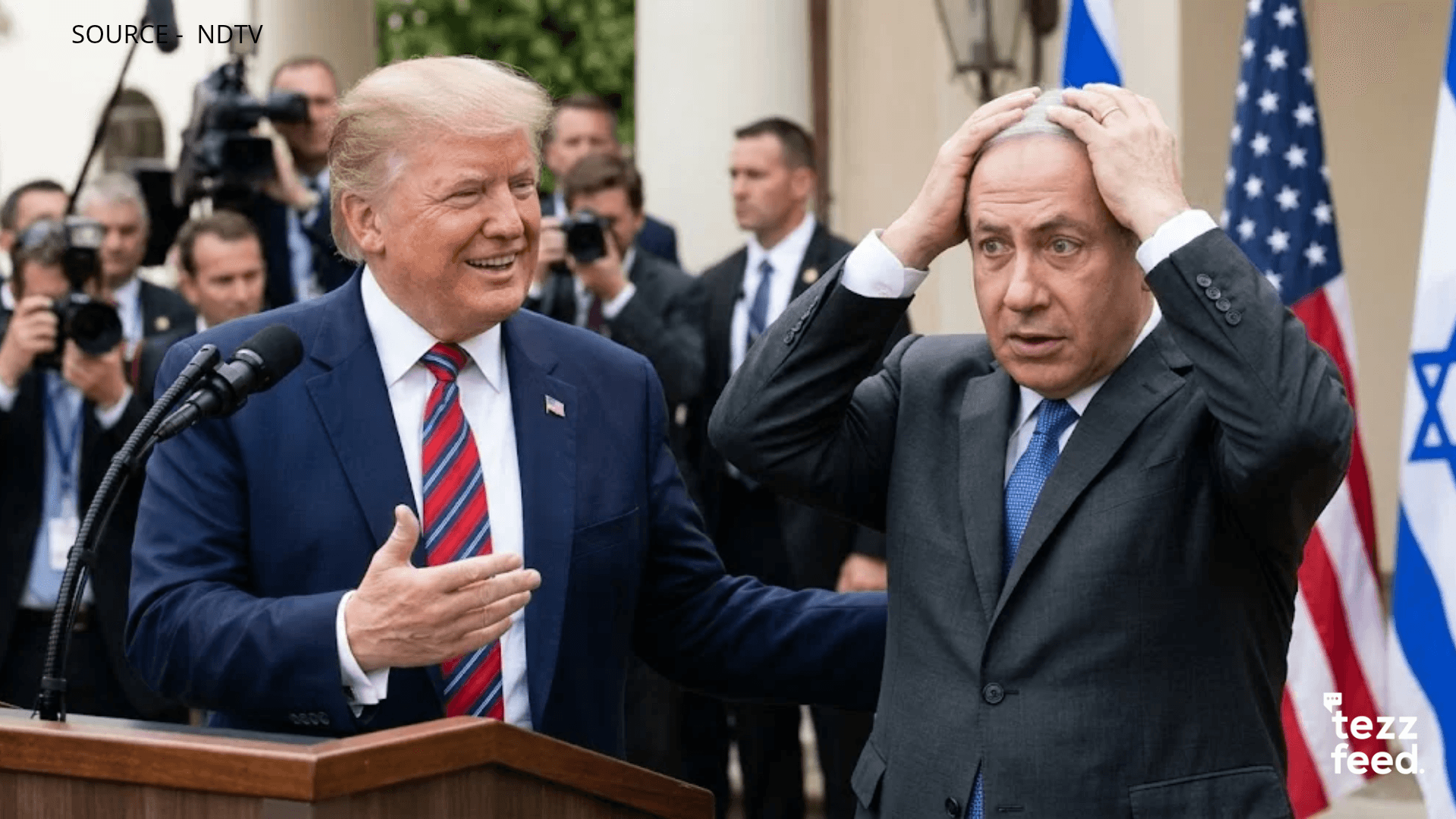
US President Donald Trump has sparked fresh international attention after joking that he could move to Israel and become its prime minister if Americans eventually become tired of his leadership. During an interview with Fox News on November 3, 2026, Trump claimed that his approval rating in Israel was 99 per cent, contrasting what he described as overwhelming popularity there with the political challenges he faces at home.
The remark came on Election Day for the 2026 US midterm elections, as voters headed to the polls to decide control of Congress. Trump's comments combined humour, political confidence and his familiar emphasis on his close relationship with Israel, drawing attention to the differences between his claimed popularity abroad and public opinion in the United States.
During his phone interview with Fox News' Fox & Friends, Trump spoke about his relationship with Israel and his popularity among Israelis.
"My approval rating in Israel is 99 per cent. If people in the United States get fed up with me, I'll move to Israel and become prime minister," he said.
The president did not identify the poll or survey on which he based his claimed 99 per cent approval rating. His remark appeared to be a joke rather than a formal announcement of any intention to enter Israeli politics. Nevertheless, it attracted attention because Trump has repeatedly highlighted his relationship with Israel and its leadership. He also made a similar remark in May 2026, when he suggested that he could run for Israeli prime minister.
His statement comes amid a close political relationship with Israeli Prime Minister Benjamin Netanyahu. Trump has repeatedly praised Netanyahu and highlighted his administration's support for Israel, particularly on security and regional issues. The US president has also portrayed his relationship with the Israeli leadership as unusually strong, suggesting that his policies have earned him significant popularity among Israelis.
However, his claimed approval rating should be distinguished from independently conducted public opinion surveys. A February 2026 poll cited in subsequent reporting found that 73 per cent of Israelis considered Trump a better US president to represent their country's interests. That figure measures a specific opinion about US leadership, not Trump's overall approval rating.
The interview also attracted attention because Trump announced a significant proposed change in US financial assistance to Israel. Trump stated that he and Netanyahu had reached an understanding that Washington would stop providing approximately $4 billion in annual assistance to Israel after the end of 2026.
"Now, as far as paying Israel, Bibi Netanyahu and I have made a deal that we give Israel $4 billion a year, and we made a deal months ago that we're stopping," Trump said.
He added that the United States would still help Israel if necessary, suggesting that Washington could continue supporting the country through other arrangements, including weapons sales. Trump argued that Israel no longer needed the financial assistance and suggested that the issue had become a political talking point for Democratic politicians seeking to criticise Republicans.
However, the announcement raises questions about the future of the longstanding US-Israel military assistance arrangement. The existing memorandum of understanding, signed in 2016, provides for approximately $3.8 billion in annual military assistance through September 2028. Reuters reported that Trump did not explain how the existing arrangement would be ended early or what formal steps would be required to implement the proposed change.
Trump's comments about his popularity in Israel come at a time when his political standing in the United States has faced considerable challenges. Economic concerns, inflation, the cost of living and public dissatisfaction with government policies have become important issues for American voters. According to polling figures cited in recent reporting, Trump's overall approval rating stood at approximately 34 per cent, while 64 per cent disapproved of his performance as of late October.
The contrast between these domestic figures and Trump's claimed 99 per cent approval in Israel provides an important political backdrop to his remarks. Trump's remarks reflect the importance he places on his relationship with Israel, particularly at a time when US policy towards the Middle East remains a major subject of domestic and international debate.
His announcement about ending annual financial assistance also comes amid changing American public attitudes towards military support for Israel, particularly in connection with the conflicts in the region. For Republicans, the issue has become politically significant as some voters question the scale of American financial and military commitments overseas.
At the same time, Israel remains an important US strategic partner, and any substantial change in military assistance could have consequences for both countries. Trump's comments therefore involve more than a humorous suggestion about relocating to another country. They also touch on the political relationship between Washington and Jerusalem, American public opinion and the future of bilateral military cooperation.
Although the remark was clearly presented humorously, his claim of 99 per cent approval in Israel and his announcement about ending approximately $4 billion in annual assistance have generated wider discussion. Whether the proposed aid change becomes official remains a separate question, particularly given the existing US-Israel agreement.
For now, Trump's comments offer a glimpse into how he views his international relationships and political popularity, while highlighting the complicated balance between domestic political pressures and America's longstanding commitments with Israel.