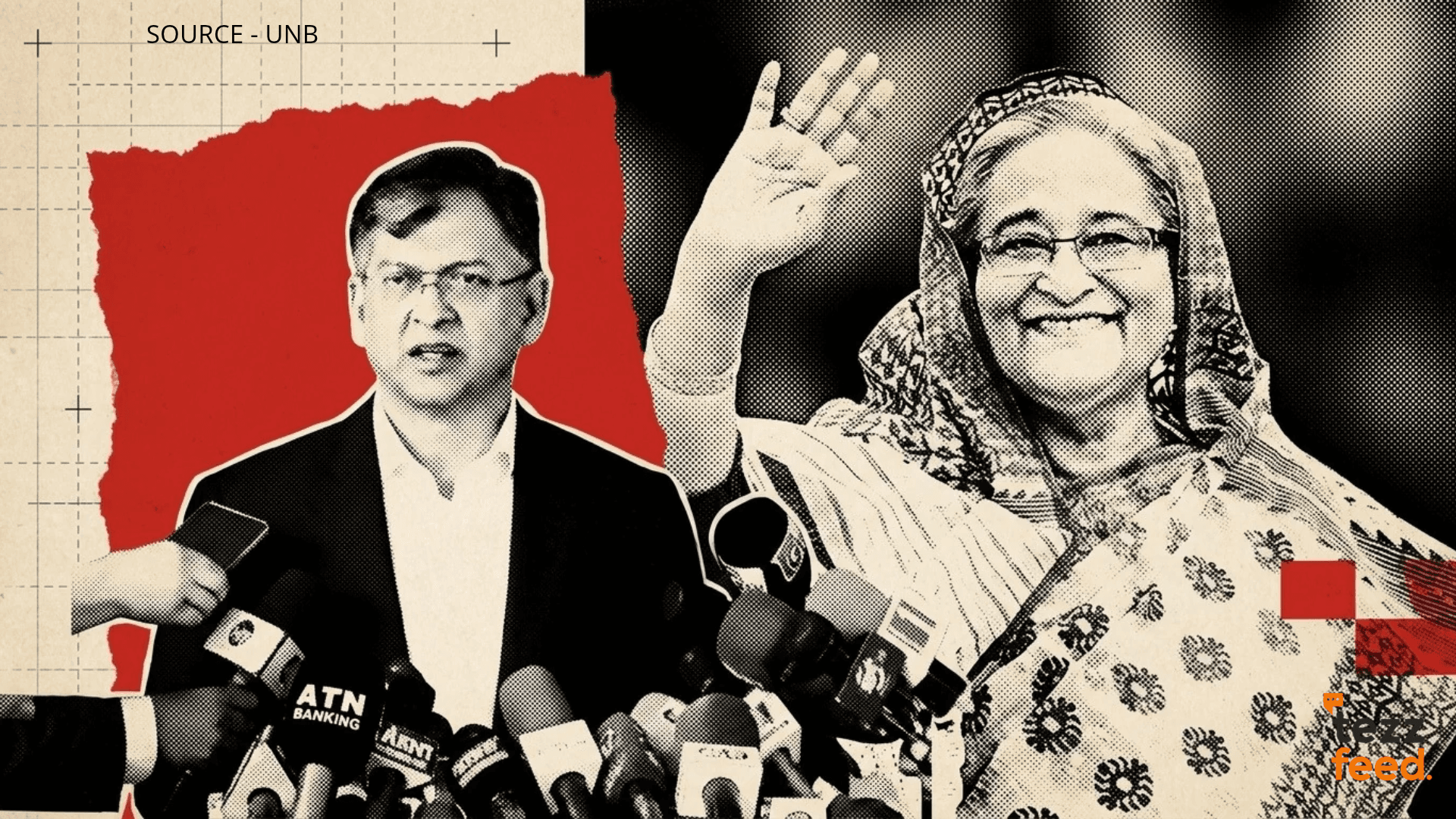
The country's Home Minister, Salahuddin Ahmed, has said that the government has not yet verified the authenticity of the reported applications. The Ministries of Foreign Affairs and Law are jointly examining the matter to determine whether the applications were properly submitted and whether Hasina is legally entitled to receive the documents. Speaking to journalists at the Secretariat on November 9, the minister said the government would review the relevant legal provisions before making any official decision.
His remarks came after international media, including Reuters, reported that lawyers representing Hasina had contacted the Bangladesh High Commission in New Delhi, requesting the issuance of a new passport and national identity card for their client.
According to the Home Minister, the government is examining several important aspects of the reported request. These include whether the applications were genuinely submitted, whether the proper procedures were followed, and whether Hasina remains legally eligible to obtain a Bangladeshi passport and NID under the existing laws. The relevant provisions of the Passport Act, Citizenship Act, and legislation governing national identity cards will also be reviewed. The minister emphasised that the government would take an official position only after completing the necessary examination. This means that, despite the widespread media coverage, the applications have not yet received official confirmation from the Bangladeshi authorities.
Addressing the issue of Hasina's possible return, Salahuddin Ahmed said the government had already approached India through diplomatic channels under the existing extradition treaty between the two countries. He confirmed that Bangladesh had sent a formal request through the Ministry of Foreign Affairs seeking her return in accordance with applicable laws and the extradition agreement. The development highlights the government's continued efforts to bring the former prime minister back to Bangladesh to face the legal proceedings against her.
The passport request has attracted considerable attention because it could be connected to Hasina's previously announced intention to return to Bangladesh in December. Her legal representatives argued that she remains a Bangladeshi citizen and should be entitled to receive the necessary travel and identity documents. However, the Bangladeshi government faces a separate legal and diplomatic question because of the criminal proceedings and conviction against her.
In November 2025, the International Crimes Tribunal sentenced Hasina to death in absentia in a case concerning the violent crackdown on the 2024 uprising. She has denied wrongdoing and challenged the legitimacy of the proceedings. The question of issuing a passport is not merely an administrative matter. It is connected to broader questions involving citizenship, legal eligibility, extradition, and the enforcement of judicial decisions.
India's position is also important because Hasina has remained there since leaving Bangladesh.
Dhaka has repeatedly sought her extradition under the bilateral treaty, while the issue has become a sensitive subject in relations between the two neighbouring countries.
The latest passport development could create further diplomatic discussions between Dhaka and New Delhi, particularly if Hasina continues with her stated plan to return. Whether the passport request is accepted, rejected, or resolved through an alternative travel arrangement remains uncertain.
The latest development comes at a sensitive time for Bangladesh, which is still dealing with the political consequences of the 2024 uprising. Hasina's possible return could have significant implications for the country's political environment, the future of the Awami League, and the government's efforts to maintain stability. It also raises important questions about how the authorities will balance legal accountability, citizenship rights, diplomatic obligations, and public expectations. For now, the government appears to be taking a cautious approach by examining the reported applications before reaching a decision.
Three major issues will determine how the situation develops:
Verification: The Foreign Affairs and Law ministries must establish whether the passport and NID requests were formally and properly submitted.
Legal eligibility: Authorities must determine whether Hasina qualifies for the requested documents under Bangladeshi law.
Extradition: Bangladesh will continue its diplomatic efforts to secure her return from India under the existing bilateral treaty.
Until these matters are resolved, the possibility of Hasina returning in December remains uncertain.