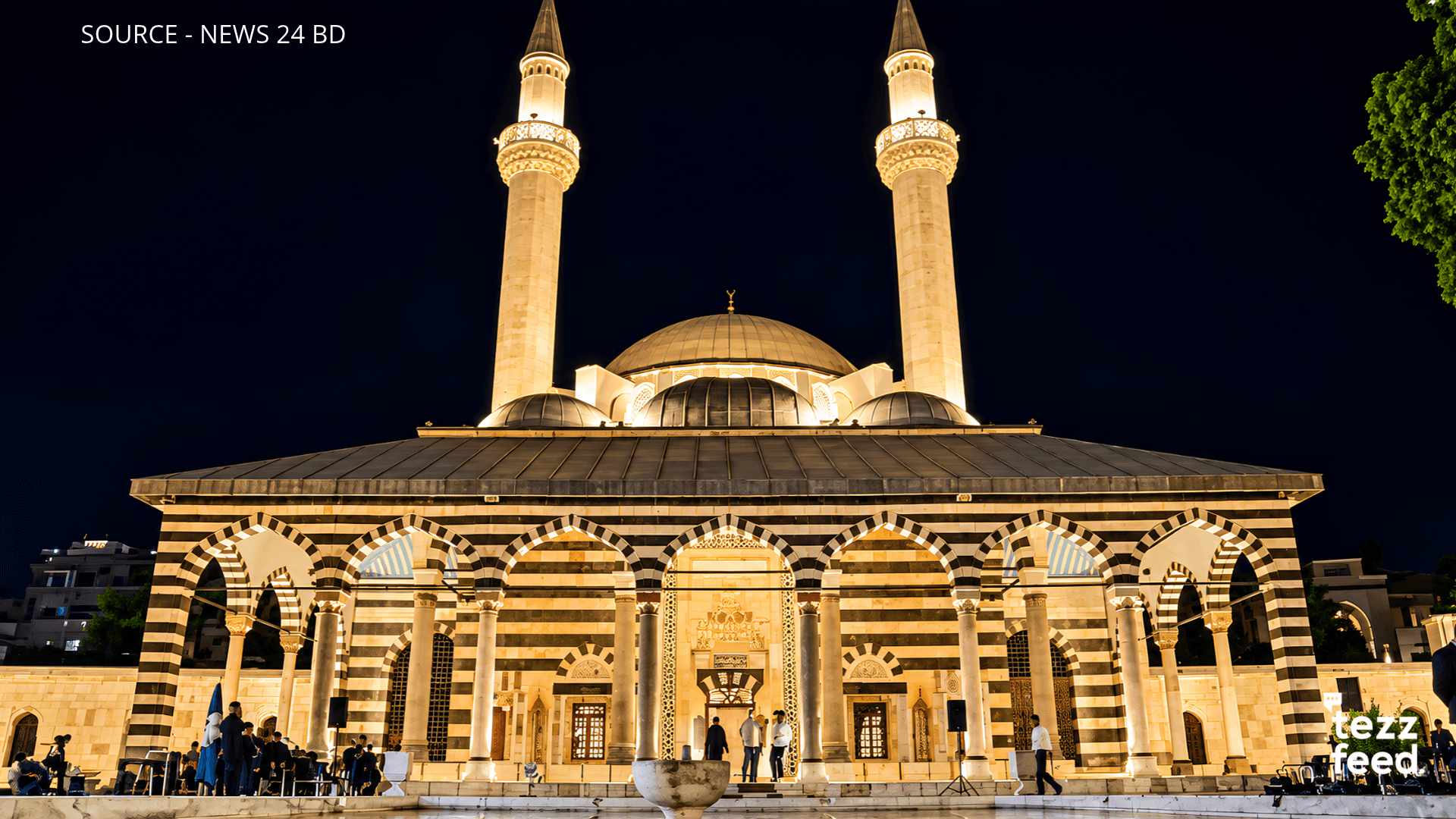
One of Damascus's historic religious landmarks, the Suleymaniye Mosque, has reopened after remaining closed for 15 years, marking an important moment for the city's cultural and architectural heritage. The mosque, known for its distinctive Ottoman-era architecture, is an important part of Damascus's historical landscape. Its reopening has attracted attention as the Syrian capital continues to see efforts to restore and preserve its historic landmarks.
The Suleymaniye complex reflects the architectural legacy of the Ottoman period in Syria. Commissioned under Sultan Suleiman the Magnificent and designed by the celebrated Ottoman architect, Mimar Sinan, the complex reflects the architectural ambition and religious patronage of the period. Its design combines Ottoman imperial aesthetics with elements of the region's established architectural traditions, such as elegant domes, minarets, and traditional design. Also making it a notable example of the region's Islamic architectural heritage.
Ottoman rule in Syria began in 1516, following Sultan Selim I's victory over the Mamluks, and continued until the end of the First World War in 1918. During these four centuries, Damascus developed as an important administrative, commercial, and religious center within the empire. Its position along major trade and pilgrimage routes helped it maintain connections with Istanbul, Arabia, and other parts of the Islamic world.
The Ottoman architectural legacy remains visible throughout Damascus. Mosques, religious schools, public fountains, markets, and charitable complexes reflected the empire's distinctive architectural traditions. Characteristic features included elegant domes, slender minarets, spacious courtyards, decorative stonework, colorful ceramic tiles, and intricate calligraphy.
The reopening is significant not only for worshippers but also for those interested in preserving Syria's rich history. After years of closure, the return of the mosque to public use represents an opportunity for residents and visitors to reconnect with an important part of Damascus's religious and cultural identity. Historic mosques are more than places of worship; they are living reminders of the communities, traditions, and architectural achievements that shaped cities over centuries.
The reopening of the Suleymaniye Mosque is therefore more than the opening of a religious building; it is a welcome step towards preserving and reconnecting with Damascus's remarkable historical heritage. It also brings renewed attention to the profound architectural and cultural influence of the Ottoman Empire on Syria, particularly Damascus, one of the most historically significant cities of West Asia.