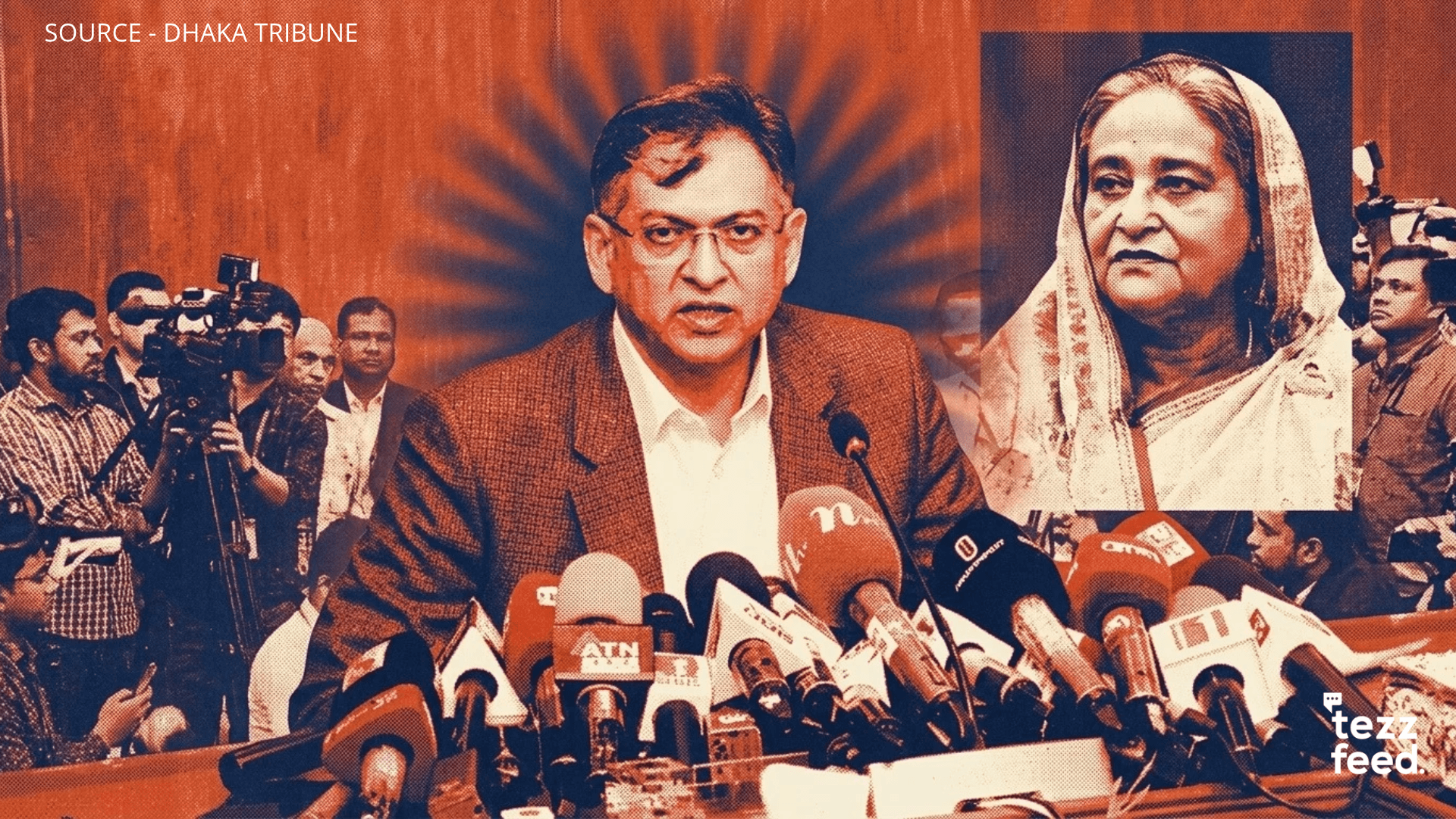
Bangladesh Home Minister Salahuddin Ahmed has declared that the Awami League will never be allowed to return to democratic politics in the country. Speaking at a press briefing at the Ministry of Home Affairs in the Secretariat on Wednesday, the minister said the Awami League had transformed itself into what he described as a terrorist organisation through its activities and would not be permitted to resume political operations in Bangladesh.
Addressing journalists, Salahuddin Ahmed said the Awami League had lost its status as a legitimate political party following the events of the 2024 mass uprising, which led to the collapse of its government and the departure of several senior party leaders from the country. Drawing comparisons with Nazi Germany, the home minister argued that organisations held responsible for mass atrocities should not be allowed to return to democratic politics. He maintained that the Awami League would similarly never regain its place in Bangladesh's political system.
He also issued a stern warning to anyone attempting to create instability, engage in extremist activities, commit arson or damage public and private property, saying those responsible would face strict legal action.
The minister's comments reflect the government's firm position on the future of the former ruling party, whose political activities have already been prohibited through a government notification, while the Election Commission has suspended its registration. However, the question of a permanent ban and the party's legal accountability remains subject to judicial proceedings.
The home minister also raised concerns about alleged attempts by Awami League leaders operating from abroad to organise disruptive activities inside Bangladesh. According to Salahuddin, some fugitive leaders were instructing their remaining supporters in the country to organise torch processions, lockdowns, shutdowns and general strikes. Warning against violence and destructive activities, he said law enforcement agencies were prepared to take action against anyone involved in extremist activities, arson or attempts to harm human lives and property.
The minister added that security agencies had so far managed to prevent several alleged attempts at sabotage through strategic planning and restraint, without causing loss of life or damage to property. He stressed that the government would not tolerate activities threatening public safety and national stability.
Responding to questions about the possibility of permanently banning the Awami League, Salahuddin Ahmed said the matter was currently part of an ongoing judicial process. He referred to the International Crimes (Tribunals) (Amendment) Act, 2026, and Article 47 of the Constitution, arguing that the legal framework provides scope for prosecuting political parties and organisations, alongside individuals, for crimes against humanity. He said the party's activities and those of its affiliated organisations had already been prohibited through an official notification issued during the interim government's tenure. The Election Commission had also suspended the Awami League's registration, preventing it from participating in electoral politics under its existing registration. The minister indicated that further legal steps would depend on the ongoing judicial process.
The press briefing also addressed questions concerning former Prime Minister Sheikh Hasina's possible return to Bangladesh. Salahuddin Ahmed said her return would have to be handled under the extradition treaty between Bangladesh and India. He stated that the government had already communicated with the neighbouring country through diplomatic channels, with the Ministry of Foreign Affairs handling the matter.
According to the minister, the Indian authorities had indicated that the request would be examined in accordance with their laws and appropriate action would be considered. He dismissed repeated speculation about Hasina's possible return dates, including November, December and December 16, saying the government was neither concerned nor under pressure over the announcements.
The minister also discussed security preparations for the upcoming Victory Day celebrations on December 16. Responding to questions about the deployment of Border Guard Bangladesh (BGB) personnel in different districts, he said deploying additional security forces alongside police was a routine measure in areas where intelligence reports indicated potential unrest. He assured journalists that the necessary security arrangements had been completed under the supervision of the Ministry of Home Affairs to ensure peaceful celebrations.
Salahuddin Ahmed also commented on continuing labour-related unrest in the garment industry. He said the minimum wage had been determined through a democratic process involving representatives of workers and employers under the Wage Board. According to the minister, genuine workers and factory owners had accepted the decision, while certain groups were allegedly spreading rumours and attempting to create disorder in industrial areas for political purposes. He said law enforcement agencies were monitoring the situation and working to identify those responsible for instigating unrest. The government, he added, was seeking to maintain industrial stability while addressing the situation through appropriate measures.
During the briefing, the home minister also discussed the government's plans to engage with different political parties. He said the Prime Minister had already held discussions with several leaders of the National Citizen Party (NCP), with further meetings with other political groups being considered. According to Salahuddin, the objective was to establish broader political cooperation and explore the possibility of forming an alliance.
The home minister's declaration that the Awami League will never return to democratic politics marks a significant statement about the government's position on the country's evolving political landscape. With the party's activities prohibited and its Election Commission registration suspended, its political future remains closely tied to ongoing legal proceedings and developments surrounding accountability for the 2024 mass uprising.
At the same time, Salahuddin Ahmed's warning against extremism, arson and sabotage signals the government's intention to maintain strict security measures against activities it considers threats to public order.
As Bangladesh navigates its post-uprising political transition, questions surrounding political accountability, democratic participation, the rule of law and the future of major political parties are likely to remain central to national debate.